

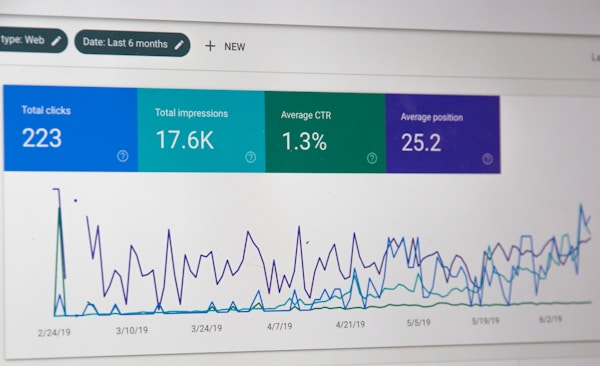
One of the industry's foremost thinkers announces the arrival of a revolution in website analytics at Google.
Whenever I can, I read Avinash Kaushik's newsletter, The Marketing × Analytics Intersect (TMAI). I strongly recommend this incredibly insightful newsletter for anyone working anywhere near web analytics. His latest issue provides a detailed explanation of new Google Analytics features he thinks are most relevant to the demands of the day. However, to focus on the features themselves is to miss the much bigger story. It’s the benefits of these features that represent a seismic shift that spells the end of website traffic analytics as we have known it for decades. In essence, Google is ushering in a brand-new era. One that many like myself, who are more interested in long-term goal setting than data assembly, have been eagerly awaiting. One that raises the bar for traditional analysts by providing them with the ability to pivot away from data gathering and toward future planning. This promises to dramatically increase the quality of advice that we analysts can give our clients. In his words, we are going from Reporting Squirrels to Analysis Ninjas. I think that he chose the term "ninja" intentionally to reflect the almost superhuman power of this kind of AI assistance.
The Reporting Squirrel
According to Kaushik, a Reporting Squirrel traditionally spends most of the day gathering...one number at a time, the way a squirrel gathers nuts before winter. Log into the dashboard. Find the right report. Export it. Format it. Send it. Repeat next month. It's honest work, and for a long time it was a major part of what "doing analytics" meant. The biggest challenge was mastering the navigation of the apps to find the right reports or to create customized reports.
The problem was that all that gathering generally only ever answers one question: what happened in the past?
The Analysis Ninja
Now, with new capabilities, on top of gathering data, Google Analytics can:
· hand you a new AI-driven traffic channel,
· trace a customer's full path to a sale,
· or answer a typed question in plain English.
That frees the analyst up to pursue higher-order endeavors, such as deciding what patterns mean and recommending what to do next.
That second part constitutes the data-driven decision-making that everybody has been talking about and aspiring to achieve. And with a level of intelligence at our fingertips, we can begin to connect our work more closely to strategies that support the long-term success of our clients. According to Kaushik, this is the kind of work that gets an analyst an audience in front of the C-suite. It's the whole reason EVM has three tiers instead of one report. The GA4 Health Audit makes sure your numbers can be trusted. The Eigen Analysis finds the handful of patterns actually driving your results. Signal Monitoring keeps watch so that you are making forward-looking decisions. AI is what makes the second and third tiers faster and sharper than they were even a year ago.
Small number, big story
One example from the issue stuck with me. Google Analytics just added a channel for traffic arriving from AI assistants like ChatGPT or Gemini, instead of a traditional Google search. For most businesses, right now, that traffic is tiny, perhaps 1 to 5% of visits. Reported on its own, that's an easy number to shrug off until you realize that that small sliver of traffic is responsible, in part, for performance that is over 40% better than other channels, according to some studies. That traffic has been shown to spend more time on product pages and generate more revenue per visit.
Here's how Kaushik put it:
"Answer-engine traffic is a couple percent of the sessions, and converts twenty-five percent better. This is not a traffic story. It is a margin story."
A Reporting Squirrel might see a channel with a 2% share and dismiss it as inconsequential. An Analysis Ninja notices that the 2% is surreptitiously some of the most valuable traffic on the site and tells you what to do about it: that it is worth watching, maybe worth a small, deliberate investment, and definitely not worth ignoring just because the count is small.
That's the whole shift in one example: the same underlying number, told two different ways, leading to two very different decisions. The gathering got automated. The judgment didn't.
What this means if you hire an analyst
If you work with someone on your website's numbers — me or anyone else — this is worth asking about directly. Are you paying for someone to hand you reports you could mostly generate yourself now? Or are you paying for someone to tell you, in plain language, what those numbers mean for your business and what to do next to move closer to the company's vision?
Only one of those jobs is getting more valuable. The report-pulling is being automated out from under all of us, and although it may feel unsettling, it's the best thing that's happened to this field in years. It means the time I spend with a client's data goes almost entirely toward the interesting question: "Given what just happened, now what?"
Full credit for the framing in this post goes to Avinash Kaushik and TMAI Issue #521 — go subscribe if you touch analytics for a living. If you'd like a second opinion on what your own numbers are trying to tell you, that's exactly what an Eigen Analysis is for. Get in touch and let's find your signal.